
Custom Hats Toronto: What Actually Matters Before You Order
The hat you pick says something before anyone sees your logo. A structured snapback signals streetwear credibility. A relaxed dad hat suggests approachability. A mesh-back trucker screams outdoor lifestyle. Get this wrong, and even a perfect logo lands on the wrong canvas.
Toronto businesses order thousands of custom hats yearly for corporate events, team uniforms, promotional giveaways, and retail merchandise. Most focus entirely on logo placement while ignoring the fundamentals that determine whether people actually wear the hat.
This guide breaks down what matters when ordering custom hats in Toronto: choosing the right style for your audience, selecting branding methods that match your design, avoiding expensive mistakes, and evaluating local suppliers.
Custom Hat Styles: Match the Cap to Your Audience
Snapbacks: The Bold Statement for Custom Hats
Snapbacks feature a flat brim, structured front panels, and an adjustable plastic snap closure. The rigid construction holds shape well and provides a large, stable surface for custom hat logos.
Works best for:
- Streetwear and urban fashion brands
- Sports teams and athletic organizations
- Corporate giveaways targeting younger demographics
- Music and entertainment merchandise
Technical considerations: The structured front panel handles complex embroidery well. Flat brims can be customized with undervisor printing for added visual impact.
Skip this style if: Your audience skews older or your brand positioning is casual and approachable. The structured look reads as "trying too hard" in laid-back settings.
Dad Hats: The Versatile Classic for Custom Hats
Dad hats feature an unstructured, low-profile crown with a pre-curved brim. The soft construction conforms to head shape over time, creating a worn-in look that many customers prefer.
Works best for:
- Lifestyle and casual brands
- Coffee shops, breweries, and restaurants
- Creative agencies and design studios
- Bands and independent musicians
Technical considerations: The unstructured crown means less rigid surface for embroidery. Simpler logos with fewer stitch counts work better. The curved brim limits placement options but creates a more approachable aesthetic.
Skip this style if: You need to display a complex, multi-color logo or want a structured, professional appearance.
Trucker Caps: The Outdoor Standard for Custom Hats
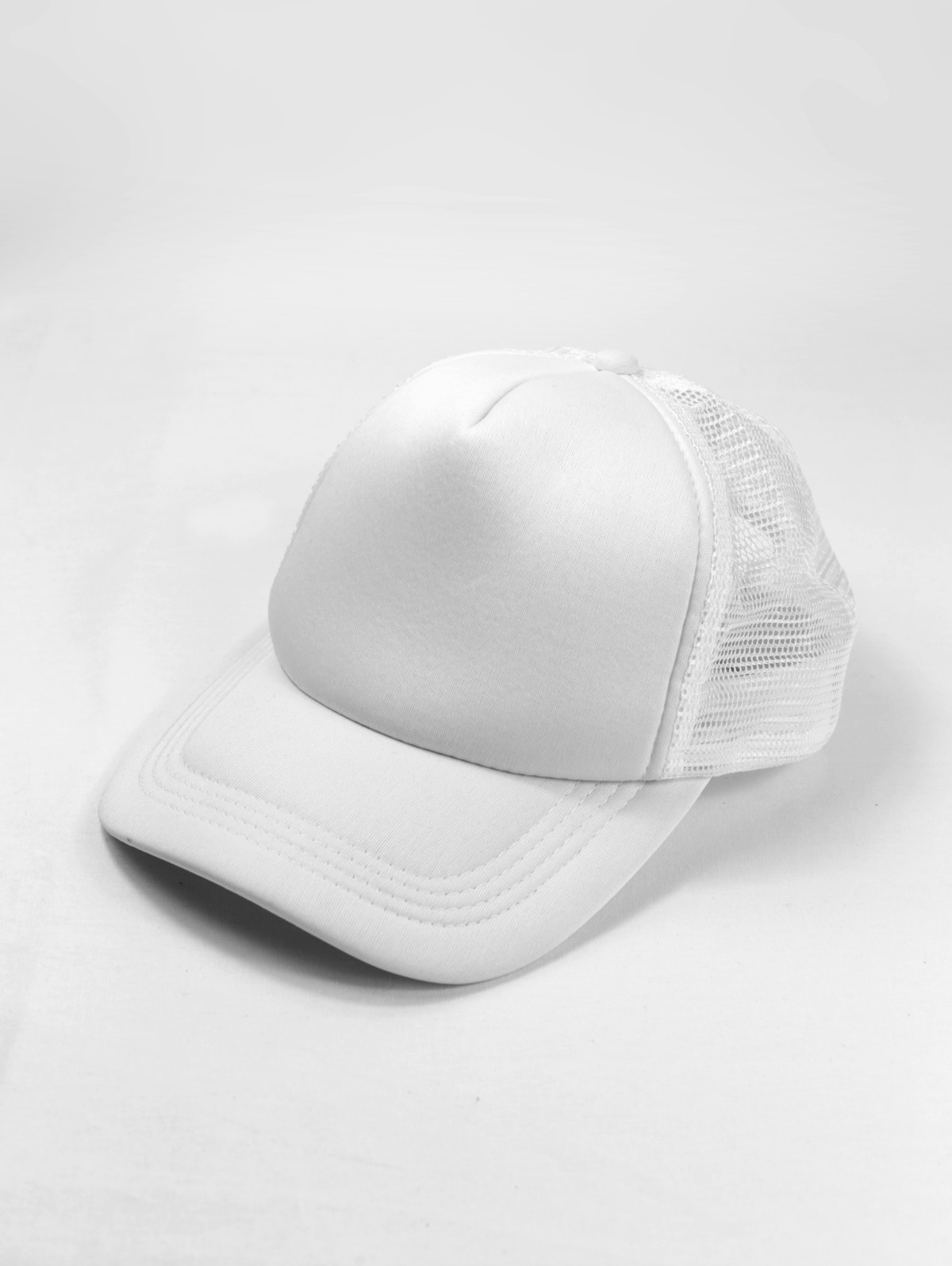
Trucker hats combine a foam or structured front panel with mesh back panels. Originally designed for agricultural and trucking companies, they've become a staple in outdoor and casual branding.
Works best for:
- Outdoor recreation brands
- Construction, trades, and industrial companies
- Breweries and craft beverage brands
- Summer events and outdoor festivals
Technical considerations: The foam front provides an excellent surface for embroidery and patches. Mesh backs offer superior ventilation but limit branding options to the front panel. The casual aesthetic pairs well with both embroidered logos and printed patches.
Skip this style if: You're targeting formal corporate settings or your brand aesthetic is minimalist and refined.
Five-Panel and Camper Caps: The Trendy Option
Five-panel caps have a distinctive flat front and minimal construction. Popular in skateboarding and streetwear, they offer a unique silhouette that stands out from traditional baseball caps.
Works best for:
- Skateboard and action sports brands
- Fashion-forward retail merchandise
- Limited edition drops and special releases
Skip this style if: You need broad appeal across demographics or want a timeless look that won't feel dated.
Beanies: The Cold-Weather Essential
Knit beanies are essential for Toronto's winter months. They offer a different branding canvas than structured caps, with options for embroidered logos, woven patches, or leather tags.
Works best for:
- Year-round brand presence in Toronto's climate
- Outdoor and winter sports brands
- Casual lifestyle companies
- Employee uniforms for outdoor workers
Technical considerations: Embroidery on knit material requires proper backing to prevent puckering. Smaller logos with fewer details work best. Leather or woven patches offer an alternative that avoids embroidery limitations.
Custom Hat Branding Methods: Choose the Right Technique
Embroidery: The Premium Standard for Custom Hats
Embroidery uses thread stitched directly into the custom hat fabric. The technique creates a textured, three-dimensional appearance that reads as high-quality and professional.
Best for:
- Corporate logos and professional branding
- Designs with 1-6 colors
- Text-heavy logos
- Long-term durability requirements
Limitations:
- Complex gradients and photorealistic images don't translate well
- Higher stitch counts increase production cost
- Very fine details may not reproduce accurately
- Minimum size constraints for legibility
3D Puff Embroidery: A variation where foam backing creates raised, dimensional lettering. Popular for bold text and simple shapes, but not suitable for intricate designs.
DTF (Direct-to-Film) Printing: The Detail Champion for Custom Hats
DTF printing transfers full-color designs onto the custom hat surface. The technique can reproduce photographic images, complex gradients, and unlimited colors.
Best for:
- Photo-realistic images and complex artwork
- Designs with many colors or gradients
- Small text and fine details
- Short-run orders where embroidery digitization costs are prohibitive
Limitations:
- Less textured feel than embroidery
- May not match the premium perception of stitched designs
- Durability varies by supplier and application method
- Works best on smooth, flat surfaces
Screen Printing: The Classic Method
Screen printing pushes ink through a mesh stencil onto the hat. It's cost-effective for simple designs with limited colors.
Best for:
- Simple designs with 1-3 colors
- Large quantity orders
- Flat areas like the front panel of trucker hats
- Budget-conscious projects
Limitations:
- Each color requires a separate screen
- Not suitable for gradients or photorealistic images
- Less durable than embroidery on curved surfaces
Patches: The Versatile Upgrade for Custom Hats
Patches are created separately and then attached to custom hats. Options include leather, PVC, woven fabric, and embroidered patches.
Leather Patches:
- Premium appearance and tactile quality
- Laser-engraved or debossed designs
- Works well on structured caps and beanies
- Communicates quality and durability
PVC/Rubber Patches:
- Durable and weather-resistant
- Bold, dimensional appearance
- Great for outdoor and rugged brands
Woven Patches:
- Reproduces fine detail better than embroidery
- Consistent colors and clean edges
- Good balance of quality and cost
Embroidered Patches:
- Traditional look and feel
- Can be sewn or heat-applied
- Familiar aesthetic for team and uniform applications
Common Mistakes When Ordering Custom Hats in Toronto
Mistake 1: Skipping the Sample
Production samples cost time and money, but they're essential for any significant order. Digital mockups show design placement, but they can't reveal how embroidery thread colors look on actual fabric or how a logo translates to stitched reality.
Skip the sample and you risk receiving hundreds of hats with colors that don't match, thread tension issues that distort your logo, or sizing problems you didn't anticipate.
The fix: Always request a physical sample of your custom hats before approving production. Factor sample time into your project timeline.
Mistake 2: Ignoring Stitch Count Economics
Embroidery pricing ties directly to stitch count. A complex logo with 15,000 stitches costs significantly more per hat than a simple design with 5,000 stitches.
Many Toronto businesses submit intricate artwork without understanding the cost implications, then face sticker shock on their quote.
The fix: Ask your custom hats supplier for a stitch count estimate before finalizing artwork. Consider simplifying designs specifically for custom hat embroidery to manage costs.
Mistake 3: Wrong File Format Submissions
Embroidery requires vector files that can be "digitized" into stitch instructions. Submitting low-resolution JPEGs or PNGs forces suppliers to recreate your logo, which adds cost and introduces potential errors.
The fix: Provide vector files (AI, EPS, or PDF) whenever possible. If you only have raster files, ensure they're high-resolution (300+ DPI) and supply a style guide with exact color specifications.
Mistake 4: Underestimating Lead Times
Toronto suppliers vary widely in production capacity. Some offer 7-10 business day turnaround on standard orders, while others require 3-4 weeks. Rush orders typically cost 20-50% more and may not be available during peak seasons.
The fix: Order custom hats at least 4-6 weeks before your event or deadline. For large custom hat orders (500+ units), budget 6-8 weeks minimum.
Mistake 5: Choosing Price Over Quality
The cheapest quote often means cheaper blanks, lower stitch density, or rushed production. Hats that fall apart after a few washes or have loose threads damage your brand more than having no hats at all.
The fix: Request custom hat blank samples from prospective suppliers. Ask about thread brands and stitch density. Check reviews specifically for custom hats quality concerns.
Mistake 6: Overlooking Hat Blank Quality
Not all blank hats are equal. Cheap blanks use inferior buckram (the stiff material in structured caps), weak stitching, and thin fabrics that won't hold shape.
Premium brands like Richardson, Flexfit, New Era, and Yupoong cost more but provide better fit, durability, and appearance.
The fix: Ask custom hats suppliers which blank brands they stock. Compare the same design on a budget blank versus a premium blank before committing to custom hat quantities.
Mistake 7: Forgetting About Fit
"One size fits all" doesn't actually fit everyone. Adjustable closures help, but hat depth, crown height, and brim length vary significantly between styles.
The fix: If ordering for a team or staff, gather input on preferences. Consider offering multiple size options for fitted styles or choose adjustable styles with broad fit ranges.
Evaluating Toronto Custom Hat Suppliers
Questions to Ask
Production capabilities:
- Do you embroider in-house or outsource?
- What branding methods do you offer?
- What's your standard turnaround time?
- Do you offer rush production?
Quality indicators:
- Which blank brands do you stock?
- What thread brands do you use?
- Can I see physical samples of your work?
- What's your policy on quality issues?
Service considerations:
- Do you provide digital mockups before production?
- What file formats do you accept?
- Is there a setup or digitization fee?
- What's your minimum order quantity?
Red Flags to Watch
- No physical showroom or samples available
- Unusually low prices compared to other quotes
- Vague answers about blank brands or production methods
- Long response times on quote requests
- No reviews or online presence
Local Advantage
Toronto suppliers offer advantages over online-only alternatives: you can visit showrooms to see and feel samples, faster shipping for last-minute orders, and easier resolution if issues arise. For corporate clients, local suppliers often offer account management and flexible payment terms.
Getting Started: Your Custom Hats Toronto Checklist
Before contacting suppliers:
- Define your target audience and usage context
- Choose 2-3 hat styles that match your brand
- Prepare vector logo files
- Establish your quantity and budget
- Set a realistic deadline with buffer time
When requesting quotes:
- Specify hat style and blank brand preferences
- Request stitch count estimates for embroidery
- Ask about sample options and costs
- Confirm turnaround times for your quantity
- Inquire about shipping options and costs
Before approving production:
- Review and approve digital mockup
- Request physical sample if quantity justifies cost
- Confirm all details in writing (quantity, colors, placement)
- Clarify payment terms and delivery expectations
Custom hats remain one of the most effective promotional products for Toronto businesses. The key is matching the right hat style to your audience, choosing branding methods that showcase your design properly, and working with suppliers who prioritize quality over cutting corners.
Take time upfront to get these fundamentals right, and you'll end up with custom hats people actually want to wear.